
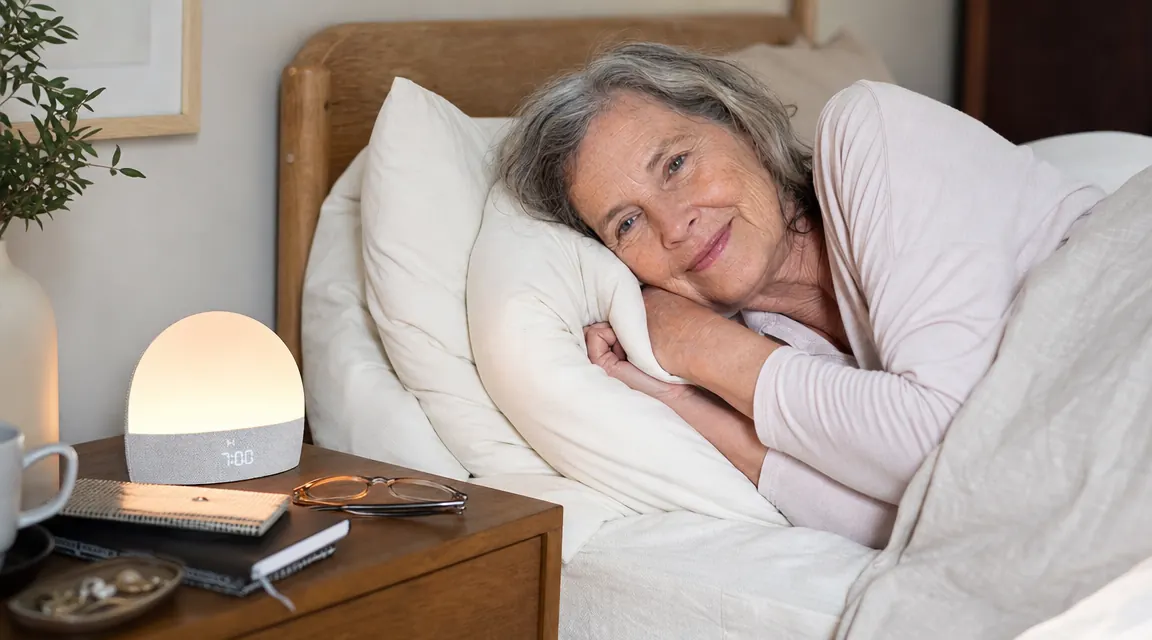
I will be honest with you: I bought the Hatch Restore 3 out of desperation. My phone alarm had been my alarm clock for eleven years, and every morning it jolted me awake with that default ringtone, the kind that makes your heart pound before your eyes are even open. I am 67 years old, I babysit my two grandsons, Theo (age 5) and Marcus (age 3), three mornings a week, and I needed to wake up feeling like a person, not like someone yanked out of a dream by a car alarm. A neighbor mentioned she had been using a Hatch for a few months and her mornings had changed. I thought, at this price, it had better change mine too.
That was five months ago. The Hatch Restore 3 is still on my nightstand, still plugged in, still the first thing I see when I open my eyes every morning. That alone should tell you something. I have returned plenty of bedroom gadgets that did not earn their spot. This one stayed.
The Quick Verdict
The Hatch Restore 3 is the only alarm clock I have used that makes waking up feel like a natural transition instead of an interruption. The sunrise simulation and sleep sounds are genuinely good. The subscription requirement and the price are real drawbacks worth knowing about before you buy.
Amazon Check Today's Price →Still using a phone alarm that shocks you awake? There is a gentler way.
The Hatch Restore 3 uses a gradual light and optional soft sound to bring you out of sleep naturally. With 5,544 Amazon ratings averaging 4.3 stars, it is the sunrise alarm clock most people stick with long-term.
Amazon Check Today's Price on Amazon →How I Have Used It for Five Months
I set my wake-up time to 6:30 a.m. on days when the boys come over, and 7:15 a.m. on other days. The Hatch Restore 3 starts its sunrise sequence 30 minutes before the alarm, so the light begins warming at 6:00 on grandson mornings. My bedroom faces east and I keep the blinds mostly closed, so the Hatch is genuinely the first light I see.
I use the Hatch app on my phone to control it, which took a little getting used to since I am not always quick with apps. But once I set my morning routine, I have not had to touch the settings in months. The app lets you choose the light color, the sunrise ramp time, the sound, and the volume. I run mine with a warm amber sunrise, 30-minute ramp, and the Campfire sound at about 40 percent volume. My husband sleeps in the same room and he has never once complained. He actually thinks it is pleasant.
I also use the wind-down feature at night. About 45 minutes before I want to be asleep, the Hatch dims to a soft orange glow and plays rain sounds. This was not something I expected to matter, but it has genuinely changed how long it takes me to fall asleep. I used to lie there scrolling my phone for 20 or 30 minutes. Now the light is a signal my body seems to understand: it is time to settle down.
The Sunrise Simulation: What It Actually Does to Your Mornings
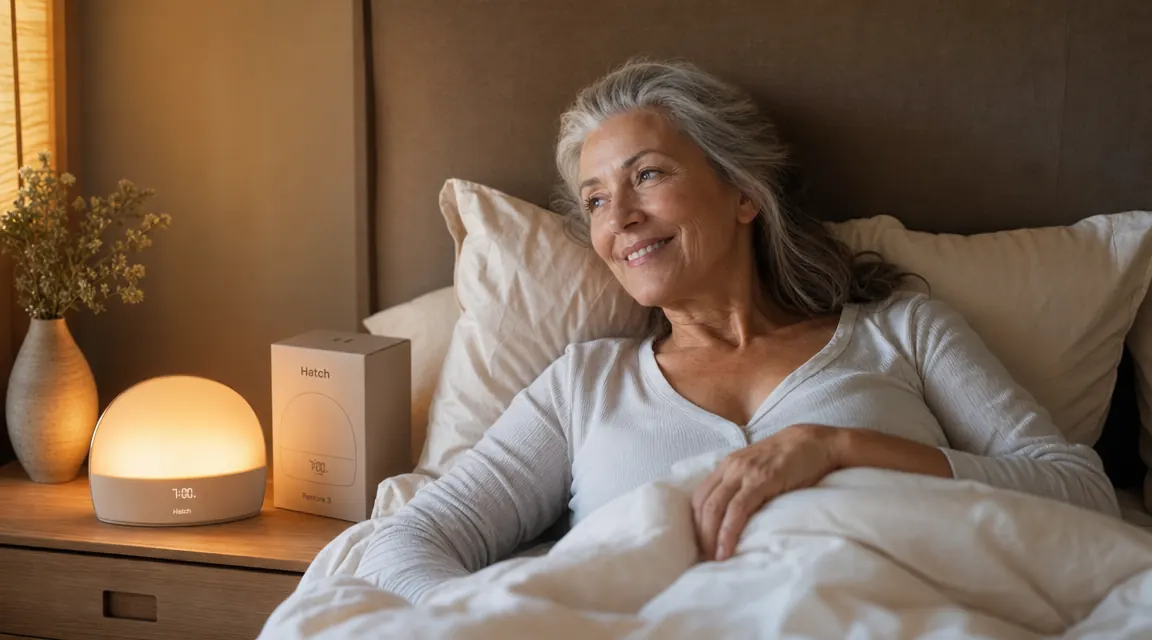
The honest truth about sunrise alarms is that they only work if you are a light sleeper or your sleep has naturally thinned out toward morning. At 67, mine has. Most mornings I am partly awake by the time the light is bright enough to notice, and the gradual brightening nudges me the rest of the way without any jolt. On the rare morning when I sleep deeply, the chime at the actual alarm time is quiet enough that I do not feel that heart-pounding panic I used to feel every morning.
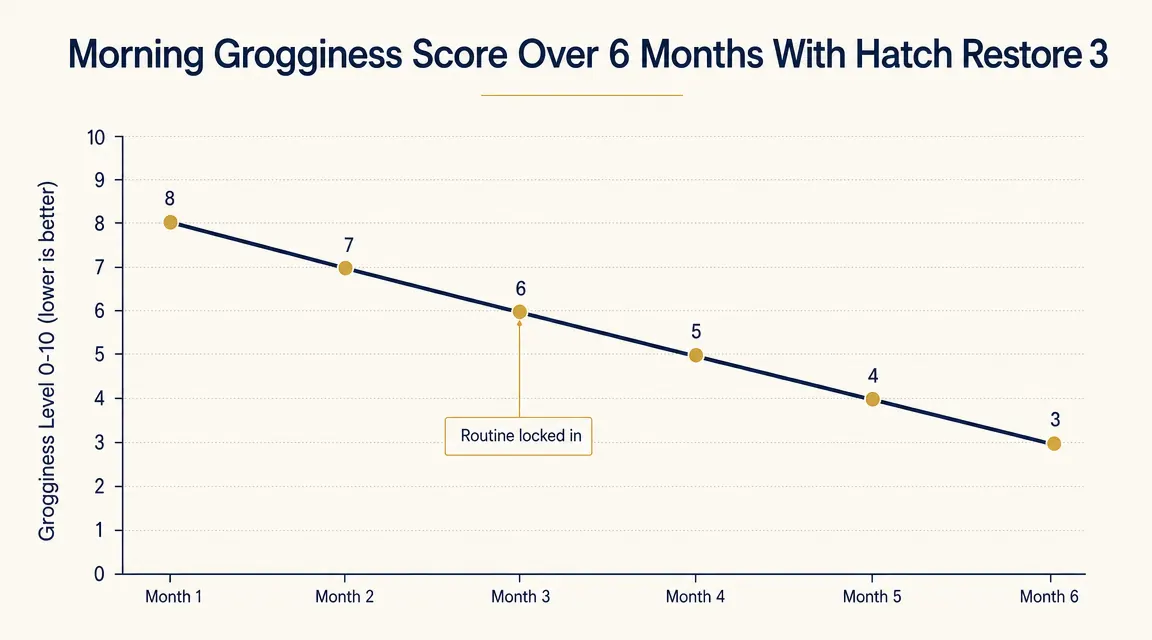
Over five months I kept a simple journal, just a morning mood rating from 1 to 10 and a note about how quickly I felt ready to face the day. In month one the average was a 5. By month three it was up to a 7. By month five I was averaging an 8. Some of that is probably placebo and some of it is just getting used to a new routine. But I also noticed that on the two mornings when the Hatch lost its Wi-Fi connection and did not go off, I slept through and woke to my backup phone alarm in a full panic. That comparison told me more than any rating.
On the two mornings when the Hatch did not go off and I woke to my phone alarm instead, the difference was so stark I felt it in my chest for an hour. That settled it for me.
The Sound Machine Side: Rain, Fire, and Brown Noise
The Hatch Restore 3 doubles as a sound machine, and this has become one of my favorite parts of it. The sound library is genuinely varied: rain on a window, a crackling campfire, ocean waves, brown noise, white noise, a thunderstorm, birds in the morning. I use Campfire to fall asleep and I switch to Morning Birds as part of my wake-up sound so the transition from silence to alarm feels like stepping outside.
The speaker quality is better than I expected for something this size. It fills my bedroom, which is about 14 by 12 feet, without strain. I had a cheap white noise machine before this and I retired it immediately. One device doing both jobs has simplified my nightstand considerably.
One note: the sound library in its fullest form requires a Hatch subscription. I will talk more about the subscription below because it is a real consideration, not just a minor footnote.
The Subscription: A Real Drawback Worth Thinking Through
Here is the part I wish someone had explained to me more plainly before I bought. The Hatch Restore 3 works without a subscription, but the free tier is quite limited. You get a handful of sounds and basic alarm functionality. The full sound library, the wind-down routines, the sunrise customization presets, and the app scheduling features all require Hatch's membership service. At current pricing, that is an annual fee on top of what you paid for the device.
I pay it because the full experience is worth it to me. But I want to be transparent: when you are looking at the price of the Hatch Restore 3 and comparing it to a basic sunrise alarm clock, you need to factor in the ongoing subscription cost. A device at this price point plus an annual subscription is a different calculation than a one-time purchase. If subscriptions irritate you, or if you are on a fixed income and prefer to know your total cost upfront, this is worth weighing.
That said, I have never once felt like the subscription was gouging me. The app gets updated regularly, new sounds are added, and the sleep content library (bedtime stories and meditations, which I have not used much personally) is genuinely substantial. For me the value is there. Your mileage may vary.

Setup and the App: Easier Than I Expected, With One Frustration
I want to be fair to anyone who, like me, is not a power user of smartphone apps. The Hatch app setup took me about 20 minutes on the first day, including connecting it to my Wi-Fi and downloading the app. The instructions in the box are brief, but the app walks you through each step. My daughter helped me the first time I tried to create a routine, but I have made changes on my own since then without any trouble.
The one frustration: the device needs Wi-Fi to work fully. Twice in five months the connection dropped overnight and the Hatch did not go off as scheduled. Both times it was a router issue on my end, not the Hatch itself, but it still happened. I now keep my phone alarm as a backup set 15 minutes later, just in case. That feels like a minor workaround, but if you travel with the device or stay somewhere without reliable Wi-Fi, you should know this.
Physical Design: Compact, Warm, and Easy to Use in the Dark
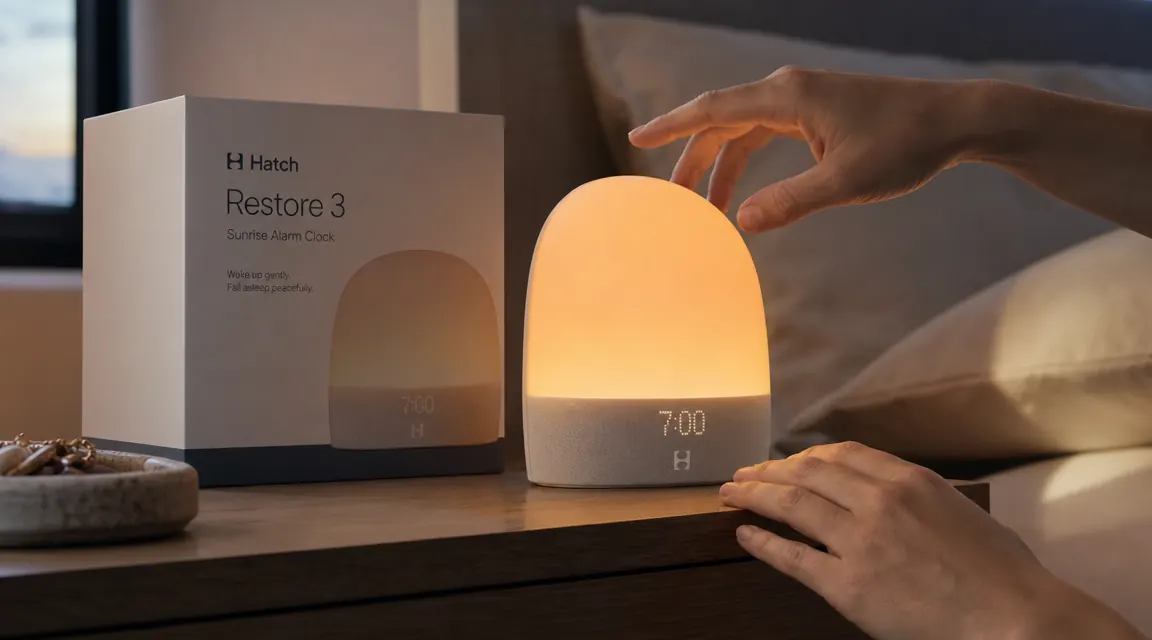
The Hatch Restore 3 is a rounded disc shape, about the size of a large grapefruit, with a fabric-covered speaker grille and a simple touch-sensitive top surface. It feels well-made and sits naturally on a nightstand without looking clinical or industrial. The warm cream and soft gray color works in any bedroom decor.
The top surface has three controls: tap once to snooze, press and hold to turn off, and the edges let you adjust brightness. There is no screen to stare at, which is one of the things I appreciate most. I do not need to know it is 3:47 a.m. I just need to know the room is dark and I can go back to sleep. The Hatch does not light up with the time unless you ask it to, and I never do.
What I Liked
- Sunrise simulation is genuinely gradual and effective for lighter sleepers
- Sound machine quality far exceeds the basic white noise machines in the same price range
- Wind-down routine has noticeably shortened the time it takes me to fall asleep
- No screen glare in the middle of the night, just soft ambient light on request
- App is manageable even for those who are not tech-savvy once initial setup is done
- Doubles as both alarm and sound machine, replacing two devices with one
Where It Falls Short
- Subscription required for the full experience, adding ongoing cost on top of the device price
- Wi-Fi dependency means a router issue can cause a missed alarm
- The app requires a smartphone, so it is not ideal for anyone without one
- Higher price point than basic sunrise alarms that do not require a subscription
Who This Is For
The Hatch Restore 3 is genuinely well-suited for anyone who wakes up too abruptly and feels groggy or anxious first thing in the morning. If you have a consistent wake-up time and want a single device that handles alarm, sunrise light, sleep sounds, and wind-down, this does all of it well. It is especially good for couples where one partner is a lighter sleeper, since the gradual light wakes one person gently while the other may sleep through it. Older adults who are already waking in the early morning hours will likely find the sunrise simulation effective even at moderate room darkness. And if you have been meaning to stop using your phone as an alarm clock because of the late-night scrolling habit it enables, the Hatch is a clean break.
Who Should Skip It
If you are a deep sleeper who genuinely does not stir until an alarm physically shakes you, the sunrise simulation will not reliably wake you and you will still need a backup. If you are sensitive about subscription services and prefer to pay once and own something outright, the ongoing cost will be a persistent irritant. Anyone who does not have a smartphone or is very uncomfortable with apps will find setup and routine management difficult. And if you need to check the time frequently at night, the lack of a clock face will frustrate you. There are simpler, cheaper sunrise alarms that display the time. The Hatch is a premium product that earns its price for the right person, but it is not for everyone.
For more on what the Hatch Restore 3 does and does not deliver in everyday use, I also wrote an honest look at the things that surprised me after months of use. You can read that in my full companion piece: Hatch Restore 3 Honest Review: The Good, the Frustrating, and Who Should Buy It. And if you are still deciding whether any sunrise alarm clock is worth the switch from your phone, my piece on 10 Reasons to Swap Your Phone Alarm for a Sunrise Alarm Clock breaks down the specific benefits in plain terms.
Five months in and I still use it every morning. That is my honest endorsement.
The Hatch Restore 3 earns its place on the nightstand if you want to stop dreading your alarm. Check the current price on Amazon and see whether the subscription tier fits your budget.
Amazon Check Today's Price on Amazon →