

My daughter brought the Yojoker 4-piece bed wedge pillow set to my hospital room the day before I came home from knee replacement surgery. The nurse had already told me I would need to keep my leg elevated for the first two weeks, and my daughter, bless her, had done her research. What I did not expect was how much I would learn about this pillow in the weeks that followed, or how many things the product page had quietly left out. I am Minia, I am 68, and I have now used this wedge set for post-surgery recovery, for snoring that started shortly after I stopped my pain medication, and yes, for the heartburn that crept in while I was stuck sleeping on my back. If you are thinking about buying one of these, let me tell you what actually happens when you put it to the test.
The short version is that it works, but not equally well for everything. The leg elevation setup is genuinely excellent. The back support configuration is decent. The anti-snore angle disappointed me more than I expected. And the learning curve to get comfortable on the right combination of pieces took about four nights, not four minutes. None of that is on the Amazon listing. It is on me now to tell you.
The Quick Verdict
A genuinely useful post-surgery and elevation aid that requires patience to set up correctly. Not every configuration delivers equally, but the leg support piece alone is worth the price.
Amazon Check Today's Price →Need to keep a leg or shoulder elevated after surgery and you cannot stand one more night of propped-up throw pillows? This set solves the exact problem.
The Yojoker 4-piece wedge set is rated 4.4 stars from nearly 2,000 buyers, and the vast majority of the positive reviews come from people in exactly that recovery situation. Check the current price below.
Amazon Check Today's Price on Amazon →How I Actually Used This Pillow
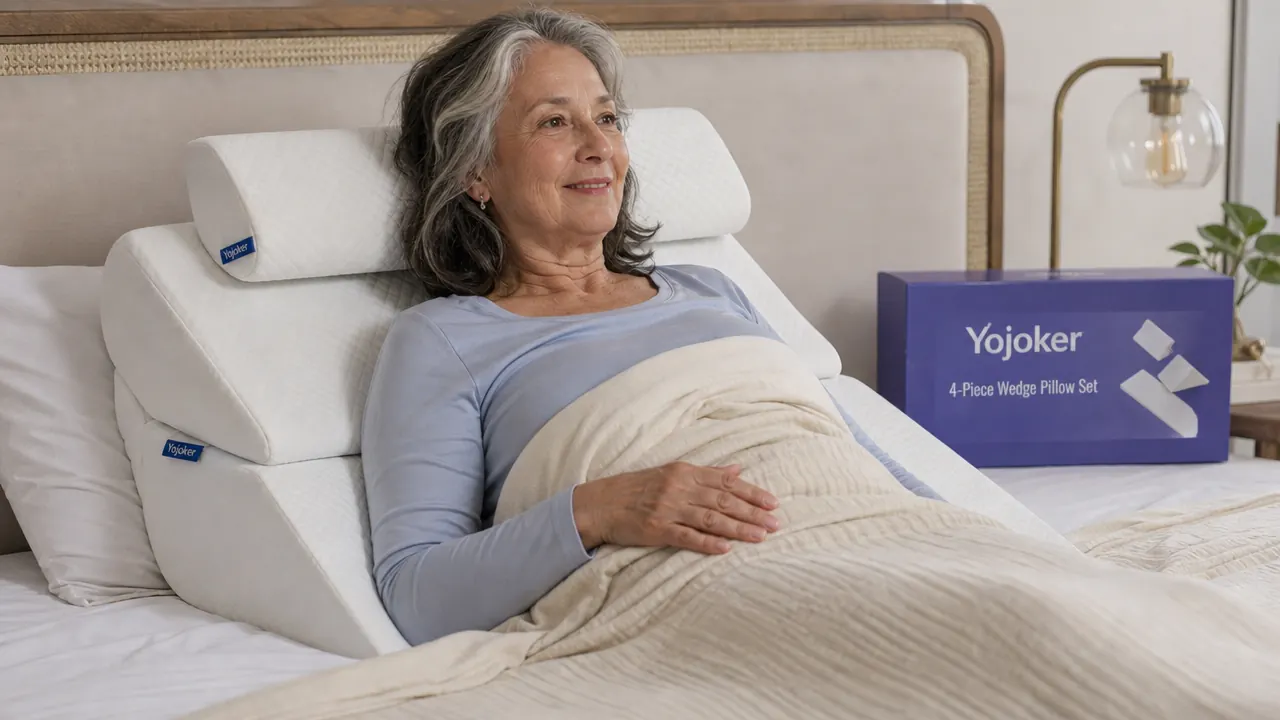
Coming home from knee replacement surgery on a Tuesday, I had exactly one goal: keep that left leg elevated and get any sleep at all. The Yojoker set came with four foam pieces. There is a large main wedge for head and back elevation, a smaller triangular back support cushion, a contoured leg elevator, and a reading wedge. Each has a removable velvet cover that zips off for washing. My daughter had set up the leg elevator between the mattress and my calf before I even made it through the front door.
Weeks one and two were exclusively about the leg elevation piece. I slept flat on my back with my left knee and calf resting over the contoured wedge. The elevation angle put my leg roughly eight inches above mattress level, which my physical therapist confirmed was appropriate. Swelling came down noticeably by day four. I am not going to credit the pillow alone for that, because I was also icing regularly and following my PT exercises, but the consistent nighttime elevation absolutely helped. I slept six-hour stretches, which my surgeon called a good sign.
By week three, I was cleared to experiment with my sleeping position more freely. That is when I started trying the head elevation and back support configurations, and when I started learning what this pillow is less good at.
What Nobody Tells You About Setting It Up
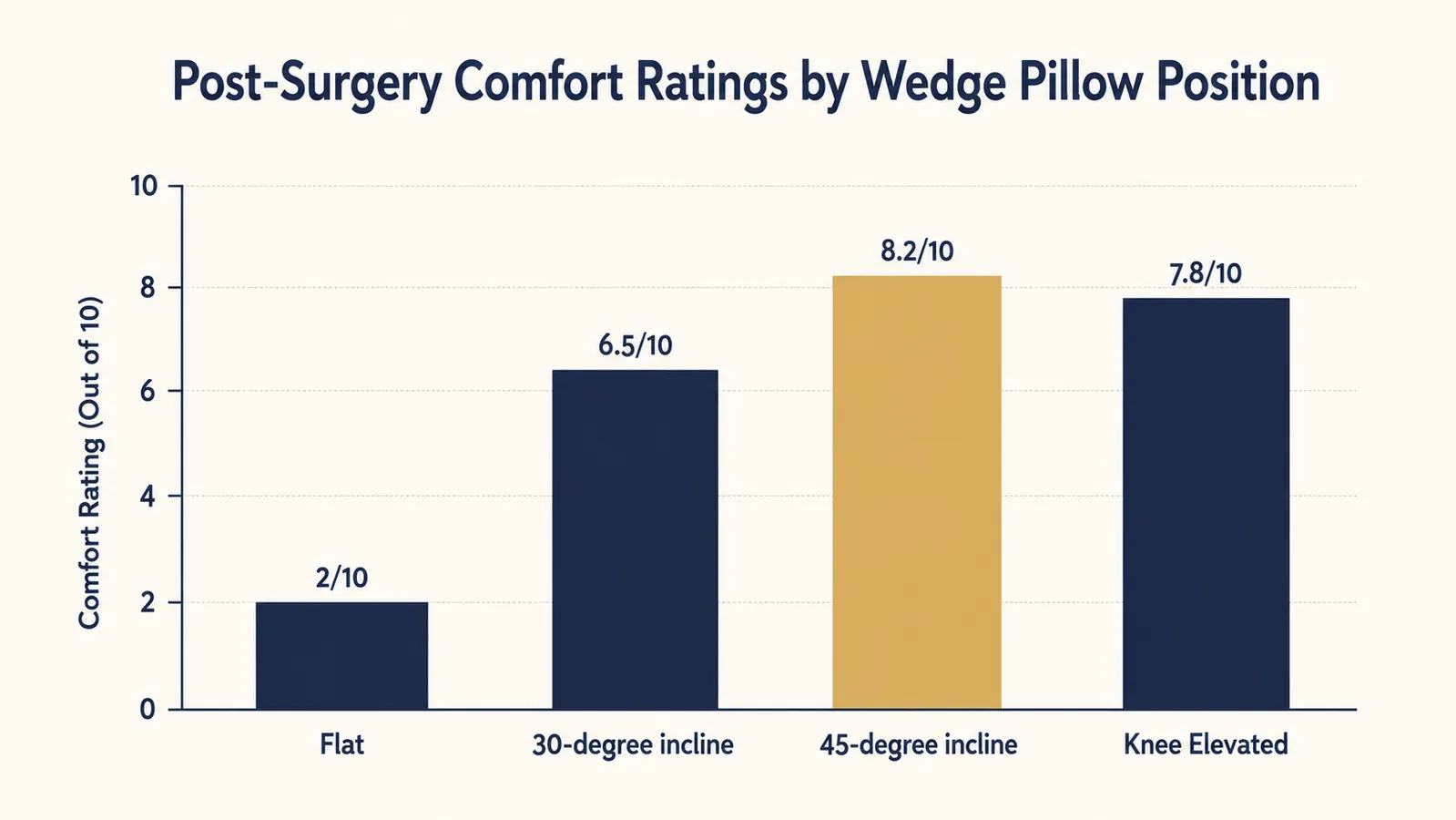
The Amazon photos make the setup look obvious. In practice, every person is a different height, weight, and shape, and the four foam pieces interact differently depending on how you stack and place them. The first night I tried the main wedge for head elevation, I put it directly against the headboard and slept with my head on top. I woke up at 3am with my neck cranked sideways because my regular pillow had slid off the wedge's slope. Night two I ditched the regular pillow entirely and put just my head on the wedge cover. Better, but the incline felt steeper than I expected, closer to 45 degrees than the gentler 30-degree rise I had imagined from the pictures. My neck adjusted after two more nights, but those middle nights were not comfortable.
The piece I figured out fastest was the reading triangle. Place it behind your lower back when you are sitting up in bed and it takes all the pressure off the tailbone and lumbar area. I have spent a lot of afternoons reading since surgery, and that small triangular wedge has been my companion every single time. It is the least-advertised piece in the set and quietly one of the most useful for anyone spending extended time in bed.
The leg elevation wedge is the real star here. I expected a wedge pillow to help with snoring and reflux. What I did not expect was how much it would improve the first two weeks of knee surgery recovery.
One practical warning: the foam is dense enough to hold its shape, which is good, but it also means the wedge does not compress under you the way a regular pillow would. If you are a back sleeper who shifts around a lot in the night, you will feel the edge of the wedge at your hips when you move toward it. I learned to put a folded sheet along the side of the wedge to smooth the transition. Small fix, but worth knowing upfront.
Post-Surgery Recovery: Where It Genuinely Shines
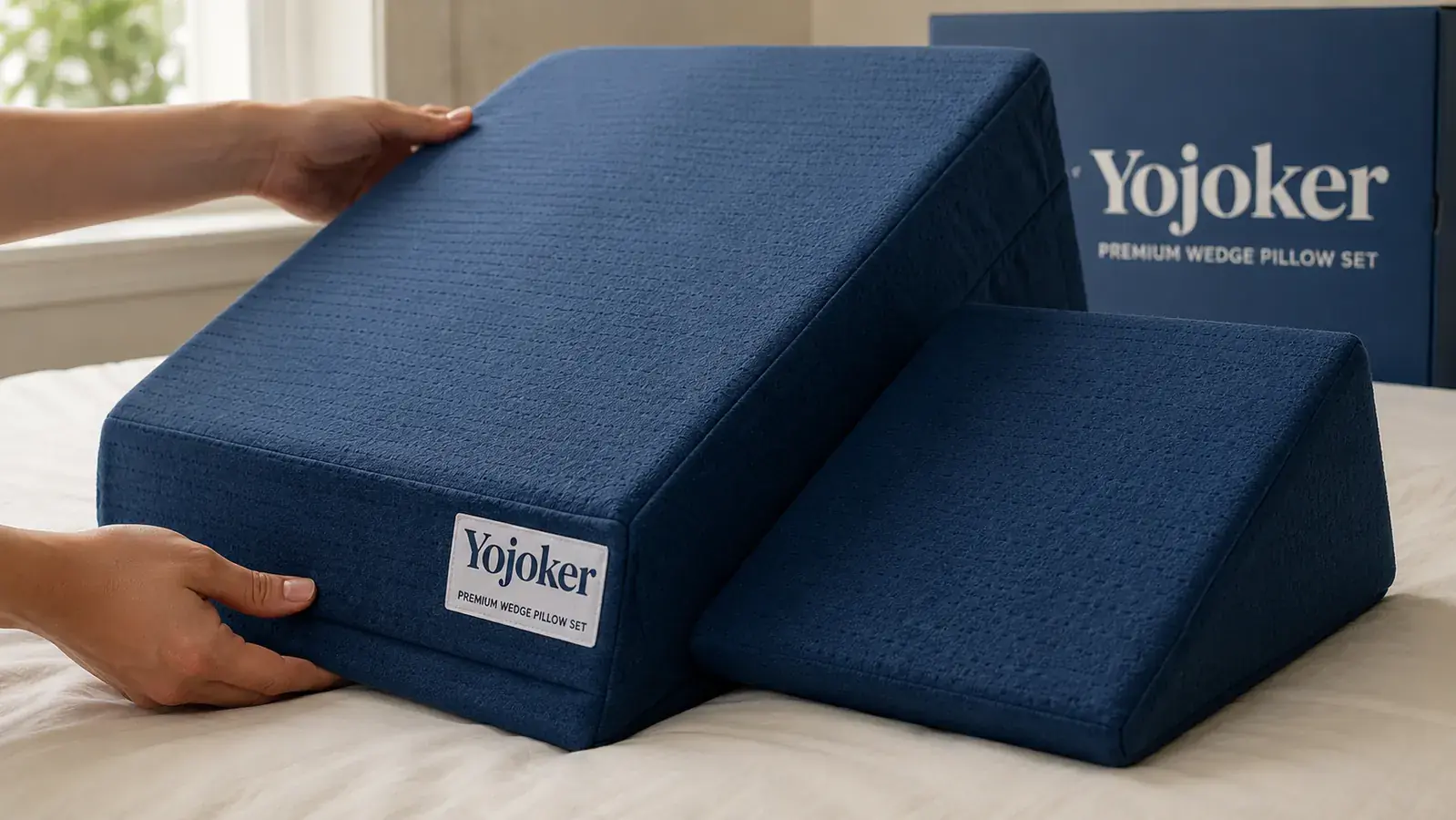
For post-surgical elevation, this set does something a stack of regular pillows cannot do reliably: it holds its position all night. I have tried using two and three stacked pillows under a knee before, from a much earlier hip procedure years ago, and they inevitably shift apart by 2am. The Yojoker leg elevator stays put because it is a single solid foam piece. There is a slight contour in the center that cups the calf and keeps it from rolling to one side. For anyone doing a knee replacement, hip replacement, or ankle surgery recovery, that stability is not a small thing. It is the difference between waking up at a proper elevation and waking up with your heel mashed into the mattress.
The foam density also matters here. It is described as high-density memory foam, and it does not collapse overnight the way softer foam would. My leg stayed at the same elevation at 6am that it was at 10pm. My physical therapist asked me twice what I was using to elevate because the swelling management in those first two weeks was better than average for my post-op age group. I told her about the Yojoker. She looked it up on her phone right there in the clinic.
If surgery recovery is your main reason for considering this set, I would say go ahead with real confidence. This is where the product earns its four-plus star rating honestly.
Snoring: Honest Results That Are More Mixed
About three weeks after surgery, my daughter mentioned gently that I had started snoring quite a bit. This was new. My doctor explained it can happen when you are sleeping flat on your back consistently, which I had been doing for recovery. So I added the main wedge under my upper body to raise my head and chest angle. The theory is sound: elevating the upper body at 30 to 45 degrees reduces airway collapse. In practice, my snoring improved but did not disappear. My daughter reported it went from a problem to an occasional mild noise. That is a real improvement, but if you are hoping a wedge pillow will fully resolve significant snoring, you need to manage expectations. For mild positional snoring, it helps. For anything more serious, it is a starting point, not a solution.
The angle of the main wedge is notably steep. I am a petite woman, five feet two inches, and the wedge puts my upper body at what feels like a steep incline. Taller or heavier people may find the angle more proportionate. I eventually started placing just the reading triangle under my upper back as a gentler alternative, which gave me a 15-degree incline instead of the full wedge angle. That gentler slope helped me sleep more comfortably while still reducing the snoring somewhat.
The Cover, the Foam, and How It Holds Up
The velvet covers are soft to the touch and do not feel scratchy against skin. They zip off easily and wash well. After six weeks of use, I have washed the leg elevator cover four times and the main wedge cover twice. No shrinking, no pilling. The velvet does attract lint and light pet hair if you have animals on the bed, so keep a lint roller nearby if that applies to you.
The foam itself has held its shape through six weeks of nightly use without any noticeable compression. I was concerned early on that a foam piece at this price point would flatten over time, the way cheap foam pillows do within a month. That has not happened. The leg elevator in particular still provides the same firm support it did on day one. I cannot speak to what happens at six months or a year, but the short-term durability has been better than I expected for the price.
One minor complaint: the covers on the two smaller pieces feel slightly thinner than the main wedge cover. Not a serious issue, but noticeable when you compare them side by side.
What I Liked
- Leg elevator piece is exceptional for post-surgery elevation and holds position all night
- Foam density is genuinely high-quality and has not compressed after six weeks of daily use
- Four-piece set gives you flexibility for different recovery needs and sleeping positions
- Covers are soft, easy to remove, and wash without shrinking or pilling
- Reading triangle is an underrated bonus that makes extended bed rest much more comfortable
- 4.4-star rating from nearly 2,000 buyers reflects a genuinely useful product, not marketing hype
Where It Falls Short
- Main wedge incline is steeper than photos suggest and takes several nights to adjust to
- Setup configuration is not intuitive and requires trial and error to find your right combination
- Snoring improvement is real but partial, not a complete fix for anything beyond mild positional snoring
- Foam edge can be felt at the hip when shifting positions at night
- Smaller piece covers feel thinner than the main wedge cover

Who This Is For
This wedge pillow set is a strong buy if you are recovering from knee, hip, ankle, or shoulder surgery and need reliable nighttime elevation. It is also a solid choice if you want to experiment with upper-body elevation for snoring or general comfort, and you understand that it will take a few nights to find the right configuration. Anyone who spends significant time resting in bed, whether from illness, injury, or just a preference for reading propped up, will find real value in the four-piece format because you can adapt the pieces to different needs as your situation changes. At the current price, the versatility makes it a reasonable investment for anyone facing a recovery stretch.
Who Should Skip It
If you are a restless sleeper who moves dramatically in the night, the rigid foam edges may frustrate you more than they help. The wedge works best for people who can sleep relatively still on their back. If you are a committed side sleeper looking for snoring relief, a different solution that works in a side position will serve you better than a wedge designed for back sleeping. And if your snoring is significant or your doctor has mentioned sleep apnea as a possibility, a wedge pillow is a comfort tool, not a medical solution. Talk to your doctor before relying on it for anything beyond general positioning support.
If post-surgery recovery or sustained leg elevation is what brought you here, this is the one I would tell my own family members to buy.
The Yojoker 4-piece wedge set solved the hardest part of my knee replacement recovery: keeping my leg elevated and stable all night without waking up to readjust anything. If that is your situation, check the current price and read the reviews from other surgical recovery buyers specifically.
Amazon Check Today's Price on Amazon →