
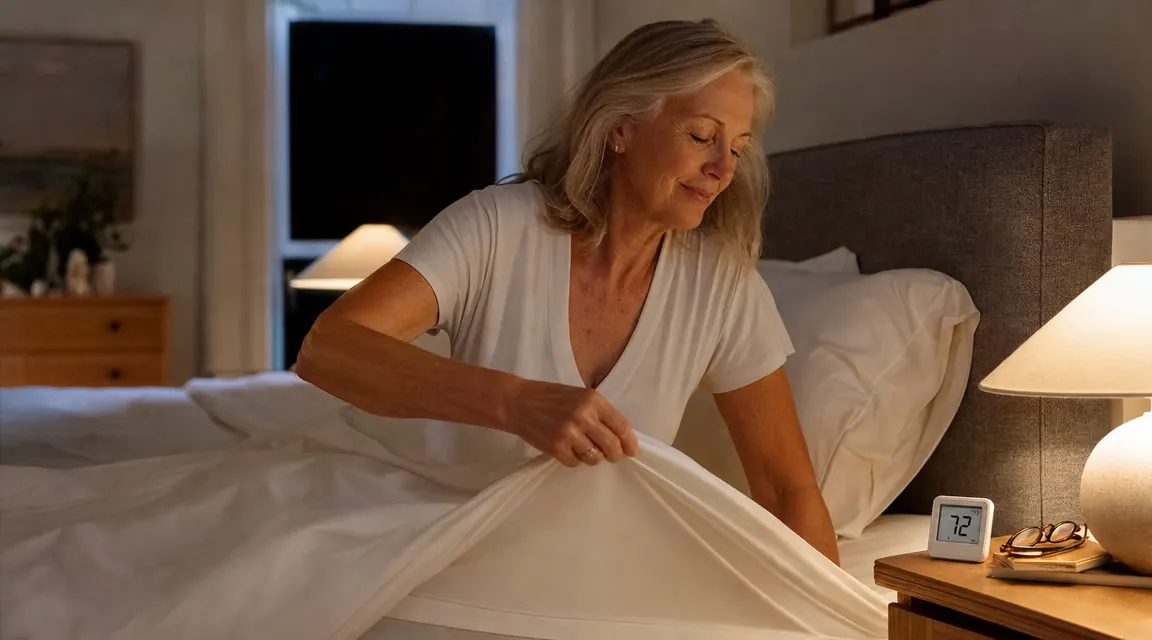
I remember the first time I woke up at 2am with my nightgown soaked through and the sheets damp underneath me. I was 64 at the time, about a year into menopause, and I assumed this was just my new normal. My doctor said the same thing. But after several months of terrible sleep, I started looking at what I could actually control, because my hormones were not something I could fix overnight. The first thing I changed was my sheets. It turned out to be the right place to start.
Night sweats have real causes, and some of them do need a doctor. But before you go down a long medical road, there is a practical checklist worth working through. Your bedding, your bedroom temperature, your pajamas, and your pre-bed habits all play a role. This guide walks you through each one, starting with the change that made the biggest difference for me: switching to bamboo sheets.
Still sleeping on cotton? That may be the first problem to solve.
Bambaw bamboo sheets are what I switched to when my cotton sheets were trapping heat and leaving me soaked every night. They are soft, breathable, and a significant upgrade for anyone who sleeps hot. Check the current price before you decide.
Amazon Check Today's Price on Amazon →Step 1: Replace Your Cotton Sheets With a Moisture-Wicking Fabric
Standard cotton sheets, especially the percale and flannel varieties, hold heat close to your body. They absorb moisture fine, but once they are wet, they stay wet. If you are already prone to night sweats, sleeping in damp cotton is a feedback loop: you sweat, the sheet holds the moisture against your skin, you get warmer, and you sweat more.
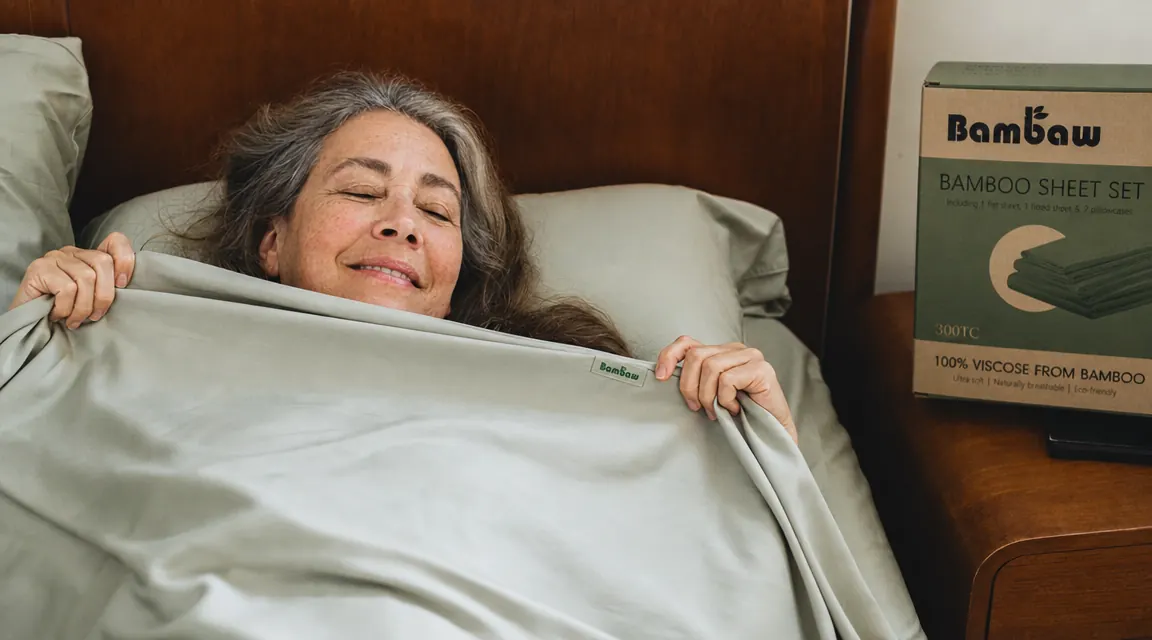
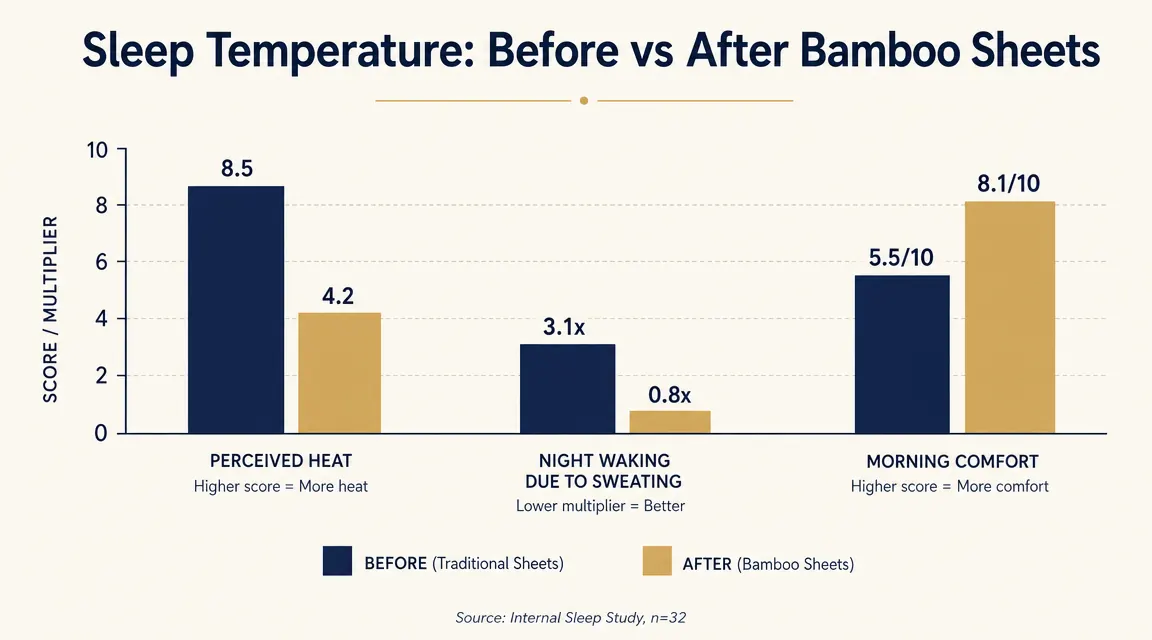
Bamboo-derived viscose fabric works differently. It has a naturally porous fiber structure that allows heat to escape instead of trapping it. It also moves moisture away from your skin more efficiently than cotton, so even when you do sweat, the fabric pulls it away from your body and dissipates it faster. I switched to the Bambaw 100% Viscose Derived from Bamboo Sheets about eight months ago and the difference was noticeable within the first week. I still have warm nights, but I no longer wake up lying in a puddle.
When shopping for bamboo sheets, look for a set rated 4.0 stars or higher with a meaningful review count so you know the cooling claims hold up in practice. The Bambaw set has a 4.4 rating across nearly 3,000 reviews, which gave me confidence it was not just clever marketing. It comes as a full 4-piece set including fitted sheet, flat sheet, and two pillowcases, so everything on your bed is working in the same direction.
Step 2: Drop Your Bedroom Temperature to 65-68 Degrees Before You Get Into Bed
Your body temperature naturally drops as you fall asleep, and that drop is part of what triggers deep sleep. If your bedroom is already warm, your body has to work harder to cool down, and that effort shows up as sweat. The sweet spot most sleep researchers point to is somewhere between 65 and 68 degrees Fahrenheit. For some people, especially those in menopause or with certain medications, 65 is not low enough, and getting down to 62 helps more.
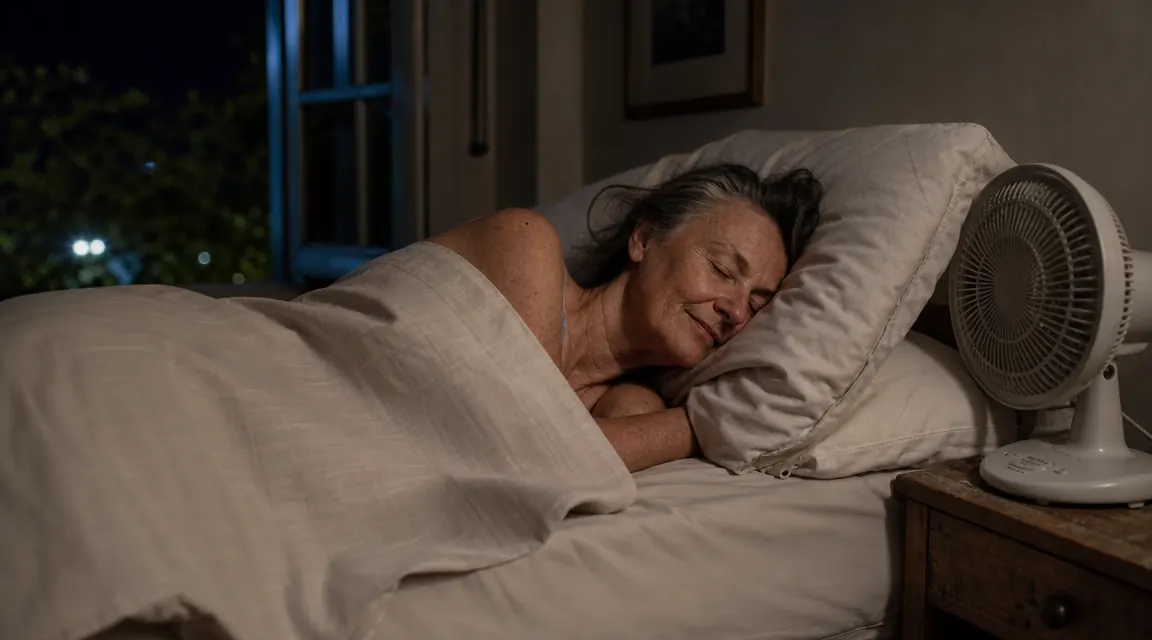
If your thermostat does not reach those temperatures or you share a bed with someone who runs cold, a small bedside fan pointed at your side of the bed is a practical fix. Even the moving air helps with evaporative cooling, especially when paired with moisture-wicking sheets. I keep a simple box fan on my side of the bedroom and run it on low all night. My husband barely notices it.
One thing I learned: do not rely on cooling the room only after you start sweating. Pre-cool the room about 30 minutes before bedtime. Going to bed in an already-cool room gives your body a head start on its natural temperature drop instead of playing catch-up.
Step 3: Switch to Lightweight, Loose-Fitting Pajamas Made From Natural Fibers
Your sheets matter, but so do your pajamas. Synthetic fabrics like polyester and nylon trap heat and do not breathe. If you are already overheating at night, synthetic sleepwear makes it significantly worse. The best options for hot sleepers are lightweight cotton (preferably loose-weave), linen, or bamboo-fabric pajamas.
For me, the shift was simple: I stopped wearing the cozy fleece pajamas I had been wearing for years and switched to a loose cotton nightgown. The difference was immediate. My grandsons used to tease me about the fleece, so at least losing them solved two problems at once.
The first week I slept on bamboo sheets in a lightweight cotton nightgown with my bedroom at 66 degrees, I slept through the night for the first time in almost a year. I did not believe it would be that simple. But it was.
Step 4: Avoid Alcohol, Spicy Food, and Large Meals in the Two Hours Before Bed
Your body's core temperature rises when it is digesting a large meal. Alcohol is vasodilatory, meaning it causes blood vessels near the skin surface to widen, which pushes heat outward and triggers sweating. Spicy food does the same thing by triggering the same nerve receptors your body uses to respond to actual heat. Any of these in the two hours before bedtime can set off a night-sweat episode even in people who do not normally have the problem.
This is one of those things that sounds obvious once you hear it, but I had been eating a big dinner late for years without connecting it to my night sweats. I moved dinner to 6pm and cut out my nightly glass of wine. Combined with the bedding changes, I noticed an improvement within a few days. I am not saying you have to give up everything you enjoy at night forever, but during the first few weeks of troubleshooting, cutting these variables out will help you figure out what is actually driving the problem.
Step 5: Take a Warm (Not Hot) Shower 60-90 Minutes Before Bed
This sounds counterintuitive. Taking a warm shower before bed actually helps your body cool down, not heat up. Here is why: when you get out of a warm shower, your blood vessels near the skin surface are dilated from the heat, and as the water evaporates, your skin temperature drops quickly. That rapid drop signals to your body that it is time to sleep, and it accelerates your core body temperature falling to its sleep-ready level.
The timing matters. Too close to bedtime and your body has not had time to cool down before you get under the covers. Sixty to ninety minutes before your actual bedtime is the window most often recommended. I started doing this about three months into my sheet switch, and it made a noticeable difference on nights when I had been dealing with stress, which tends to raise my baseline temperature.
A note on hot showers: if the water is scalding and you get out feeling flushed and sweaty, that is too hot. Warm, not hot. Think comfortable, not steaming.
What Else Helps (And What Does Not)
Once I had the five steps above dialed in, I experimented with a few other common recommendations. Some helped, some were a waste of money. A cooling mattress topper made a real difference for me, especially on hot summer nights when the room temperature was hard to control. But it was an expensive addition and not necessary if your sheets and room temp are already optimized. A separate weighted blanket marketed as 'cooling' was less impressive in my experience. The added weight traps more heat regardless of the fabric, so unless you specifically need the pressure for anxiety or restless legs, I would skip it if night sweats are your primary issue.
Magnesium glycinate, which I take for sleep support anyway, may also help with night sweats tied to muscle tension and stress. There is decent evidence it reduces cortisol, which is a known trigger for night sweats in perimenopausal and menopausal women. I cannot say definitively that it cut my sweats on its own, but it is part of my nightly routine now and I sleep better overall. If you want more detail on that, I have a separate piece on magnesium glycinate for sleep you can read through.
What did not help at all: specialty 'phase-change' pillows marketed specifically for hot sleepers. I tried one. It was cool for the first 20 minutes and then just felt like a regular pillow for the rest of the night. If you have read through the Bambaw bamboo sheets review on this site, you already know I trust product claims less than actual user experience, and on the cooling pillow front, my experience was disappointing.
Ready to start with the biggest lever: your sheets.
Bambaw bamboo sheets are what I use every night. At a 4.4 rating from nearly 3,000 buyers, they are one of the better-tested options in this price range. The full 4-piece set fits a queen bed and everything on the bed starts working together. Check the current price on Amazon before you decide.
Amazon Check Today's Price on Amazon →