
I am Minia, and I want to talk to you the way I wish someone had talked to me before I ordered the Bambaw bamboo sheets. The marketing for these things is genuinely lovely. Cooling. Silky. Sustainably sourced. 100% bamboo. All of that sounds wonderful, and some of it is true. But there are a handful of things the product description quietly skips over that I had to discover on my own, and if you are thinking about spending this kind of money on a sheet set, you deserve to know them upfront.
Let me be clear: I still have the Bambaw sheets on my bed. I like them. But liking something and giving it an honest review are two different things, and I have been a practical woman my whole life. So here is what they do not put in the headline.
The Quick Verdict
The Bambaw sheets are genuinely soft, run cooler than cotton, and hold up well in the wash if you follow the rules. But the label says viscose derived from bamboo, not 100% bamboo fiber, the slippery drape takes getting used to, and ironing is non-optional if you care about a tidy bed. Real product, real trade-offs, real value for the right buyer.
Amazon Check Today's Price →If sweaty nights are wrecking your sleep and you have already tried everything else, bamboo sheets are the simplest next step.
The Bambaw sheet set has a 4.4-star rating from nearly 2,900 Amazon buyers. Queen size, four-piece set. Check the current price and size availability before they sell out of your color.
Amazon Check Today's Price on Amazon →The Label Says Viscose Derived from Bamboo, Not 100% Bamboo
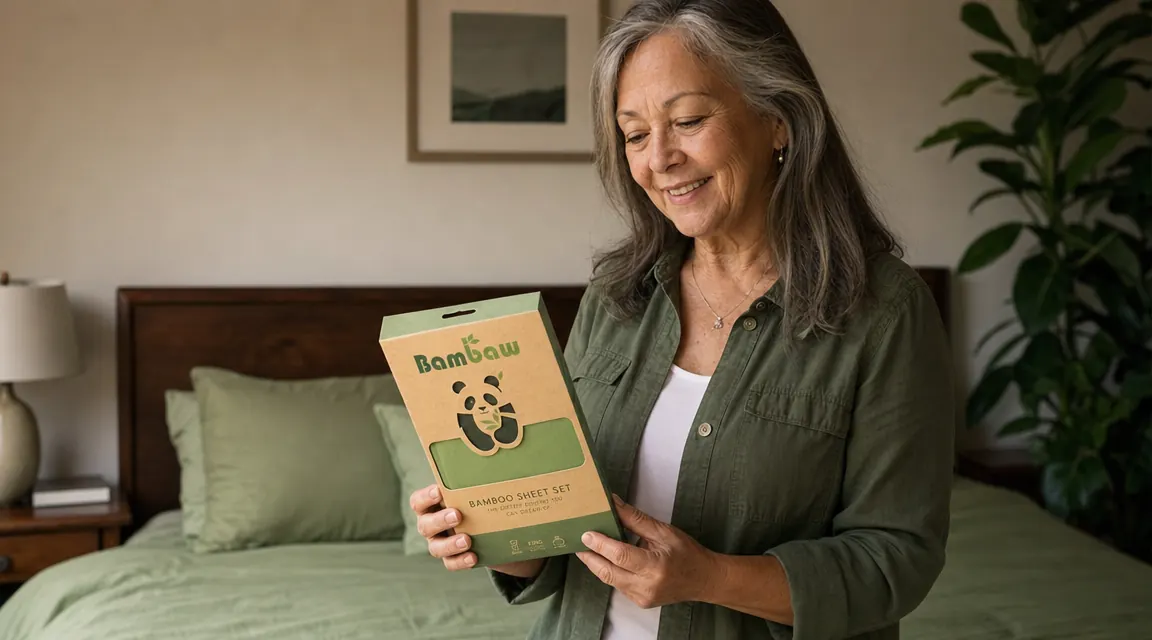
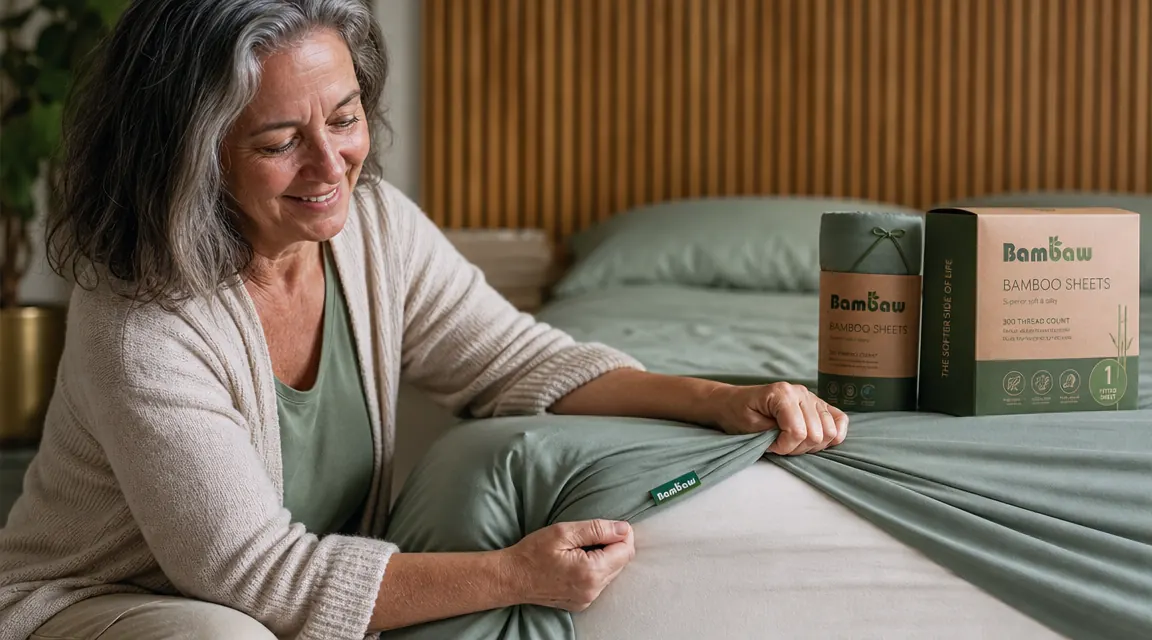
This is the one I wish I had noticed before I checked out. The product is called the Bambaw 100% Bamboo Sheet Set, and every photo and headline leans hard into the word bamboo. So I assumed the fabric was some kind of natural bamboo fiber, like linen is natural flax fiber. It is not. The full product title on Amazon, if you read it carefully, says 100% Viscose Derived from Bamboo. The official Bambaw listing even clarifies this in the product description: the fabric is made through a chemical process that converts bamboo pulp into viscose, which is then spun into thread.
Viscose from bamboo is not a scam. It is the industry-standard way of making bamboo fabric, and the Federal Trade Commission in the United States has written extensively about this because so many bamboo sheet brands used to simply say 100% bamboo without the viscose qualifier. The FTC made them stop. Bambaw is being accurate by including viscose in the fine print. But the marketing still leads with bamboo, the photos show bamboo plants, and most buyers I have spoken to were surprised when I pointed this out.
Why does it matter? For most people it does not change the sleeping experience at all. The fabric is soft, breathable, and moisture-wicking whether it started as bamboo pulp or not. But if you are buying specifically because you want a minimally processed, eco-pure natural fiber, you should know that the chemical conversion process used to make viscose is water and chemical intensive. It is still more sustainable than polyester, but it is not the same as weaving raw plant fibers the way linen is made. Know what you are buying.
They Are Slippery and That Takes Some Getting Used To
The silky feel that gets mentioned in every bamboo sheet review is real. But silky means low friction, and low friction means things slide around. My flat sheet moved on me during the night for the first two weeks. My pillowcases, which have a similar smooth drape, would shift slightly on my standard bed pillows and I would wake up with the pillow partially uncovered. My top blanket, a mid-weight cotton knit, would drift to one side because the bamboo surface beneath it gave it nothing to grip.
I solved most of this. For the flat sheet I started tucking it more firmly at the foot of the bed, military-corner style. For the pillowcases I make sure the pillow is stuffed all the way into the corner before I go to sleep. The blanket issue I fixed by getting a heavier duvet that has enough weight to stay put. None of these are major problems but they are real adjustments, and I want you to know about them before you spend a week sleeping in a slowly unwinding bed and wondering what you did wrong.
This is especially worth thinking about if you sleep with a partner who moves around a lot. A restless sleeper on a slippery bamboo surface is going to drag your top sheet across the bed with them at 3am. It is the kind of thing that sounds minor until it has woken you up three nights in a row. If you know you or your partner are restless sleepers, either get sheet clips for the corners or accept that you will be re-tucking regularly.
The Wrinkling Is Worse Than the Marketing Suggests
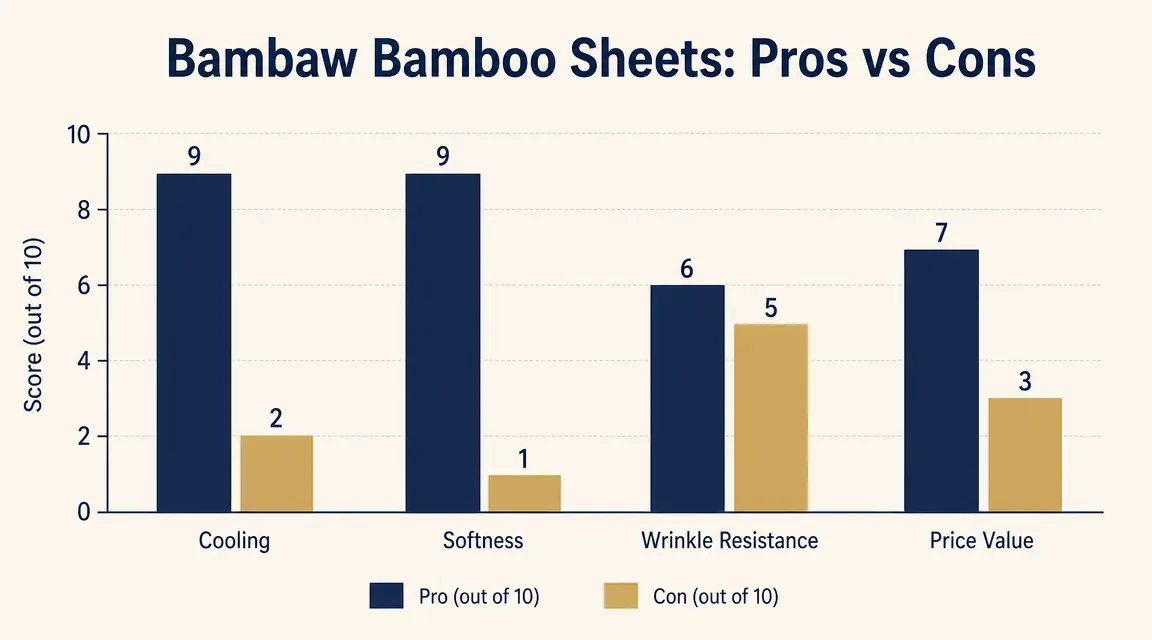
Every bamboo sheet brand shows you photos of a perfectly smooth, hotel-quality bed. Those photos are taken on carefully styled sets with fresh, probably steamed sheets. Here is the real world: bamboo viscose wrinkles. It wrinkles in the wash. It wrinkles in the dryer. It wrinkles when you sleep on it. When you pull it fresh out of the dryer and hold it up, it looks like a slightly crumpled paper bag.
The fix is to pull them off the dryer while still slightly warm and put them on the bed immediately, stretching and smoothing as you go. If you do this, you end up with a reasonably smooth result. If you let them cool in a basket for an hour before making the bed, plan on either ironing them or accepting a visibly wrinkled look. I do not iron my sheets. I go straight from dryer to bed. Most mornings the bed looks fine. Some mornings it looks like I slept through a tornado, and I make it anyway and move on.
If you are someone who cares deeply about a smooth, crisp bed, the kind that looks like a magazine photo, you will need to iron these or steam them regularly. That is just the truth. Cotton percale irons beautifully and holds its crispness longer. Bamboo does not. The trade-off is that bamboo is softer and runs cooler, but the visual trade-off is real and worth knowing about before you buy.
Those gorgeous marketing photos are taken with freshly steamed sheets on a styled set. Out of your dryer, bamboo viscose wrinkles like nobody's business. Straight from dryer to bed is the only move.
The Pilling Question: What to Expect Over Time
Pilling is when small fuzzy balls form on the fabric surface from fibers breaking and tangling together. It happens most with sheets that get heavy friction, which is every night because a human body weighs something and moves all night long. The good news for the Bambaw sheets is that I have not seen significant pilling after regular use and many wash cycles. The fabric has stayed smooth.
The bad news is that pilling risk is heavily influenced by how you wash and dry them. High heat in the dryer breaks down bamboo viscose fibers faster than any other factor. I wash on cold and dry on low, every single time, no exceptions. A neighbor of mine bought a different bamboo sheet brand, ran them on warm in the dryer twice because she was in a hurry, and had visible pilling by the end of the first month. Bambaw's care tag says cold wash and low heat. Follow it as if the sheets will turn into sandpaper if you do not, because they will get significantly rougher and pill-prone if you use high heat regularly.
Also worth knowing: do not wash bamboo sheets with heavily textured items like terry cloth towels or jeans. The rough fabrics act like sandpaper against the smooth bamboo fibers and can accelerate pilling even at low heat. I wash my bamboo sheets on their own, or with other smooth items like lightweight cotton pillowcases. It adds an extra load per week but the sheets stay nicer for longer.
What the Marketing Leaves Out About Cooling
The bamboo sheet marketing would have you believe that switching from cotton to bamboo is like switching from a wool sweater to a mesh running shirt on a hot day. The reality is more nuanced. Bamboo viscose is more breathable than standard cotton and does wick moisture away from your skin more effectively. But it is not cooling in the active sense. It does not pull heat away from your body the way a cold pack does. It does not contain gel or phase-change materials or anything that drops temperature.
What bamboo sheets actually do is stop the heat buildup that makes cotton beds feel stuffy and damp. Cotton traps warmth against your body and holds moisture there. Bamboo lets both escape more freely. So you sleep at roughly the same starting temperature, but you are less likely to wake up feeling like you are inside a warm, damp cocoon two hours later. That is a real and meaningful difference for hot sleepers. It is just not the dramatic transformation the marketing photos suggest.
If you are dealing with serious night sweats from a medical cause, such as perimenopause, thyroid issues, or certain medications, bamboo sheets will help but they will not solve the problem. My own experience is that they reduced my disrupted nights noticeably, but on my worst nights the sheets alone were not enough. On those nights I also ran a small fan and cracked the window. The sheets are one piece of a cooling sleep strategy, not a complete solution on their own.
The Things I Genuinely Like About the Bambaw Sheets
I have spent most of this review on the quirks because those are the things nobody mentions, but I want to be fair. The softness is real and it is not just a launch-night novelty. The fabric has gotten slightly softer with each wash, and it feels genuinely nice against my skin every night. I have mild eczema on my forearms and I have had zero flare-ups since switching. My previous cotton percale sheets, which I thought were quite good, were apparently rougher than I realized.
The color selection from Bambaw is also better than most bamboo sheet brands I looked at. Most bamboo brands offer white, ivory, and maybe light grey. Bambaw had enough colors that I could pick a shade that matched my bedroom without settling. The color I chose has not faded noticeably across many wash cycles, which matters to me. Faded sheets make a bedroom look tired even when everything else is tidy.
I also appreciate that Bambaw is a single-product brand built around bamboo rather than a generic home goods label that happened to add a bamboo sheet option. That does not automatically make them better, but it does mean their quality control for this one product is probably more careful than a brand producing 400 different SKUs. My read after sleeping on them regularly is that the fabric quality is consistent and the stitching on the seams is solid. I have not had any fraying or loose threads.
What I Liked
- Genuinely soft and the softness improves slightly with each wash
- More breathable than cotton, reduces that trapped-heat feeling
- Good color selection with no noticeable fading across many wash cycles
- No pilling or fraying if you follow the cold-wash, low-heat care instructions
- Gentle on sensitive skin, no irritation for my eczema-prone forearms
- Brand that specializes in bamboo rather than a generic multi-product label
Where It Falls Short
- Label says viscose derived from bamboo, not 100% natural bamboo fiber, chemical conversion process involved
- Slippery drape means sheets and pillowcases shift during the night until you learn to tuck properly
- Wrinkles significantly after washing, straight-to-bed from the dryer is required or you will be ironing
- Cooling is passive heat-release, not active temperature drop, does not eliminate serious night sweats
- Must be washed cold and dried on low heat every time, high heat causes roughness and pilling
- Should not be washed with towels or rough fabrics that can accelerate fiber breakdown
Who Should Buy the Bambaw Bamboo Sheets
If you are a hot sleeper who wakes up feeling overheated or damp, and you have not yet tried bamboo, these are worth the price. They will not fix a medical sweating problem on their own, but they meaningfully reduce the trapped-heat issue that makes cotton beds feel stuffy on warm nights. If you have sensitive skin and your current sheets feel scratchy or are causing irritation, bamboo viscose is quite gentle and a legitimate upgrade. If you air-dry laundry or are diligent about low-heat drying, you will also get more longevity from these than most cotton sheet buyers get from their sets.
I would also suggest these to anyone who has been curious about bamboo sheets for a while but has been nervous about spending the money. Bambaw is positioned at the higher end of the bamboo sheet market and the quality reflects that. If you are going to try bamboo once, this is a reasonable place to start. The brand stands behind the product and the Amazon reviews, nearly 2,900 of them at a 4.4 average, are a realistic representation of what most buyers experience.
Who Should Skip These Sheets
If you love crisp, heavily structured cotton sheets and you do not run hot at night, these will feel wrong to you. Bamboo viscose has a soft, drapey, almost liquid quality that is very different from the firm, starched feel of a high-thread-count percale. That drape is exactly what makes bamboo comfortable for me, but if you like a sheet that snaps tight and holds its shape firmly, you will likely find bamboo underwhelming or even slightly slippery in a way that irritates you.
If you care deeply about natural, minimally processed textiles, read the fine print carefully before buying. The viscose conversion process involves chemicals, and while bamboo sheets are still considered more sustainable than polyester, they are not in the same category as unprocessed linen or organic cotton. That is not a dealbreaker for most people but it may matter to you specifically. And if you cannot commit to cold-water washing and low-heat drying every single time, these sheets will deteriorate faster than cotton and you will feel like you wasted your money. The care requirements are not onerous but they are non-negotiable.
Go in with eyes open, follow the care instructions, and these sheets will reward you every night.
The Bambaw bamboo sheet set is sold on Amazon with free Prime shipping. Queen and other sizes available. If you sleep hot, have sensitive skin, or just want something softer than your current cotton, check the current price and see if it fits your budget.
Amazon Check Today's Price on Amazon →