
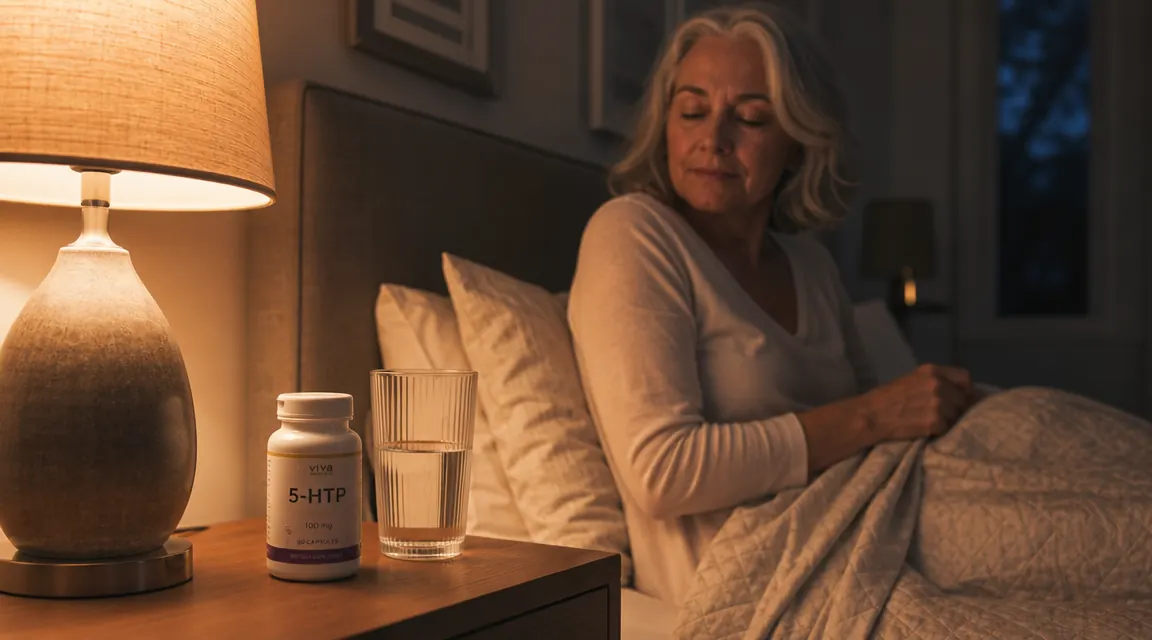
I have been waking up between 2am and 3am for as long as I can remember. My husband would be sound asleep and I would just be lying there, staring at the ceiling, thinking about nothing in particular. My doctor checked everything. My bloodwork looked fine. She mentioned offhand that a lot of people my age run low on magnesium and do not know it. That conversation led me to Doctor's Best High Absorption Magnesium Glycinate, and after a few months of taking it every single night, I want to share what I have noticed.
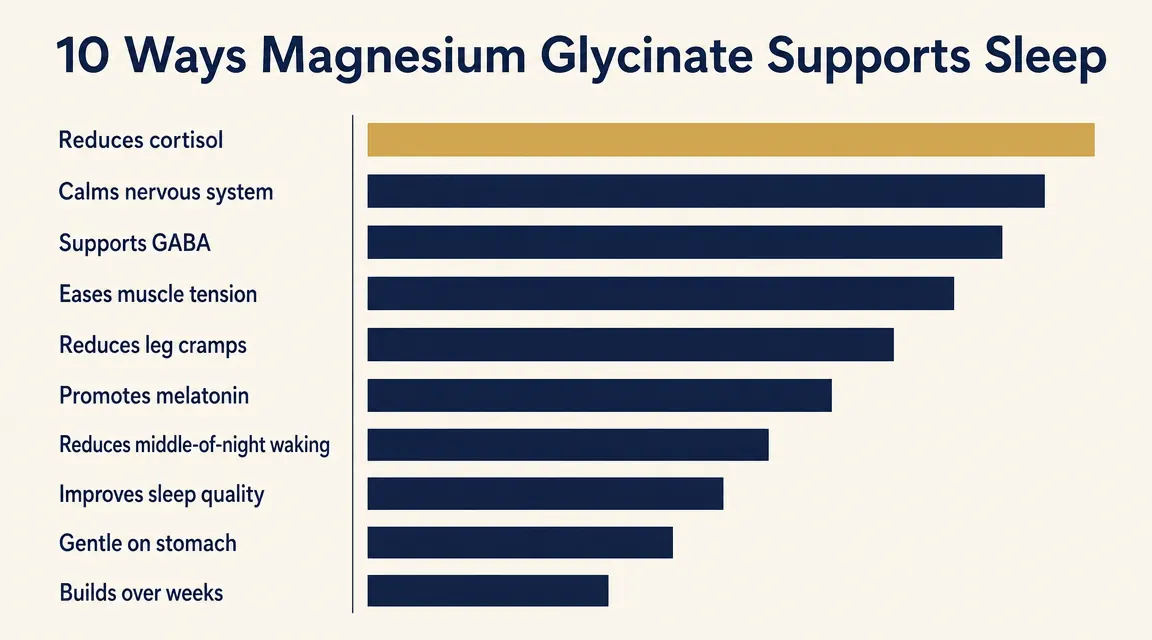
This is not a miracle cure list. Magnesium glycinate is a supplement, not a sleeping pill. But there are real reasons why it shows up again and again in conversations about better sleep, and I want to walk you through each of them in plain language. Please check with your doctor before starting any new supplement, especially if you take prescription medications. That said, here are ten things magnesium glycinate may do that make sleep easier to get and hold onto.
Still waking up at 2am for no good reason? This is what I take every night.
Doctor's Best Magnesium Glycinate has over 75,000 reviews on Amazon and a 4.6-star rating. It uses a chelated form that is gentle on the stomach and absorbs well. I take two capsules about an hour before bed.
Amazon Check Today's Price on Amazon →It Helps Your Nervous System Wind Down
Magnesium plays a role in regulating the nervous system. When you are running low, your body has a harder time shifting out of alert mode at night. Glycinate is one of the most absorbable forms, which means more of it actually gets into your system rather than passing through unused. For me, this showed up as feeling less keyed up when I got into bed, even on days when I had been busy with the grandsons.

It Supports the Production of GABA
GABA is a calming brain chemical that helps reduce mental chatter before sleep. Magnesium helps your brain produce and use GABA more effectively. This is not the same as taking a sedative. Think of it more like giving your brain the raw materials it needs to quiet itself down naturally. I noticed I was less likely to replay the day's events in my head when trying to fall asleep.
It Relaxes Your Muscles
Muscle tension is a quiet thief of sleep. You may not even notice that your legs or lower back are tight until you try to relax. Magnesium is involved in muscle relaxation at a cellular level. Many people who take it report fewer leg cramps at night, which is especially common as we get older. I had been dealing with occasional calf cramps for years, and those have mostly stopped since I started taking this.
It Is Gentle on the Stomach
Some forms of magnesium, particularly magnesium oxide and magnesium citrate in high doses, can cause digestive upset or loose stools. Glycinate is bound to the amino acid glycine, which makes it much gentler on the gut. I was worried about this when I started because I have a sensitive stomach, but I have not had any issues at all. This is one of the main reasons people specifically seek out the glycinate form.
It May Help You Stay Asleep Longer
Falling asleep is one problem. Staying asleep is another. Magnesium glycinate addresses both. It supports the regulation of melatonin, the hormone your body uses to stay in sleep mode through the night. I used to wake up at 2am and lie there for an hour or more. These days I still sometimes stir, but I fall back asleep within minutes instead of watching the clock.
I used to lie awake for over an hour after waking at 2am. These days I stir and fall right back to sleep. That one change has made a bigger difference in my days than I expected.
It Works With Your Body, Not Against It
Sleeping pills can leave you groggy the next morning, which makes it hard to keep up with grandchildren or do anything that requires real energy. Magnesium glycinate does not knock you out. It supports your body's existing sleep chemistry rather than overriding it. I still wake up feeling like myself, just better rested. That distinction matters a lot to me.
Many People Are Deficient Without Knowing It
Magnesium deficiency is more common than most people realize. Soil quality has declined over decades, meaning many foods that used to be magnesium-rich now contain less of it. Stress also depletes magnesium faster. If you eat a typical modern diet and deal with any ongoing stress, there is a reasonable chance your levels are lower than they should be. A supplement like this fills a gap that food alone may not close.

Glycine Itself Has Calming Properties
The glycine in magnesium glycinate is not just there for absorption. Glycine is an amino acid that has been studied on its own for its calming and sleep-supporting properties. You are essentially getting two sleep-supportive compounds in one capsule. The combination appears to work better for many people than magnesium alone. This is one reason glycinate tends to outperform other forms specifically for sleep purposes.
It Is Easy to Take Consistently
The best supplement is the one you will actually take every night. Doctor's Best comes in capsules that are easy to swallow, and there is no taste or smell to deal with. I keep the bottle on my nightstand next to my water glass so I never forget. Consistency matters with magnesium because the benefits build over time rather than hitting you all at once. By week two or three I started noticing a real difference.
It Is Affordable and Has an Enormous Track Record
Doctor's Best Magnesium Glycinate has over 75,000 reviews on Amazon with a 4.6-star rating. That is one of the largest review pools I have seen for any sleep supplement. The current price makes it one of the more affordable things you can add to your nighttime routine. Compared to weighted blankets, new pillows, or sleep trackers, a bottle of magnesium glycinate is a very low-risk place to start.
What I Would Skip
Magnesium glycinate is not for everyone. If you have kidney disease, your kidneys may not filter excess magnesium efficiently, which makes supplementation something to discuss carefully with your doctor before starting. I also would not lean on this if your sleep problems are rooted in sleep apnea, severe anxiety, or a medical condition that has not been evaluated. Supplements support good sleep habits; they do not replace diagnosis and treatment. And if you are taking any medications, including blood pressure medications, antibiotics, or diabetes drugs, check for interactions first.
For those of us whose sleep just got lighter and patchier with age, with no obvious medical cause, this is exactly the kind of low-risk, low-cost thing worth trying. I wish I had started years ago. If you want to read a full breakdown of how I take it and what to expect in the first few weeks, my detailed look is over at the Doctor's Best Magnesium Glycinate long-term review. And if you want the practical guide on timing and dose, check out how to use magnesium glycinate for better sleep.
If any of these ten reasons sound familiar, this might be worth a try.
Doctor's Best High Absorption Magnesium Glycinate is the one I use and the one I would recommend to a friend. Over 75,000 Amazon customers agree it is worth it. Check the current price and see if it fits your routine.
Amazon Check Today's Price on Amazon →